Shiplap vs. Nickel-Gap Tongue-and-Groove: Why Installation Matters
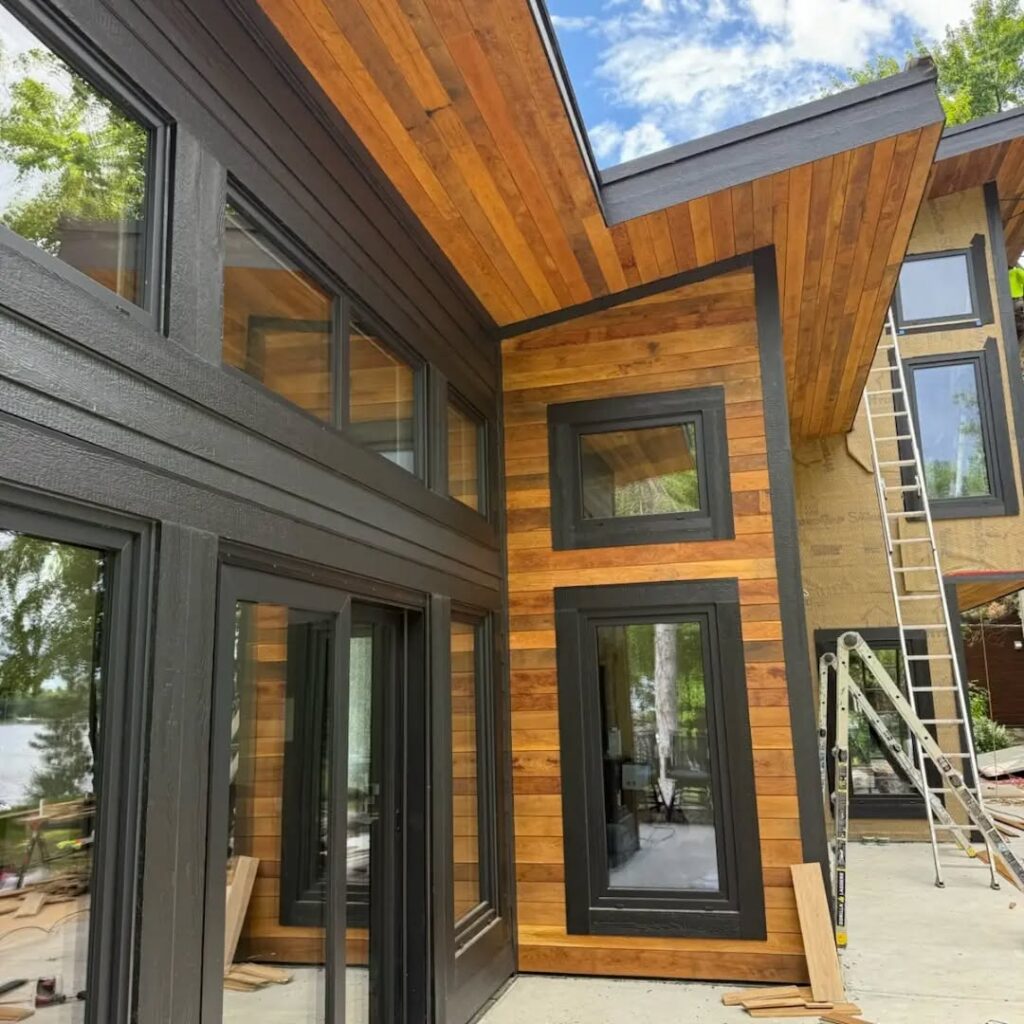
When comparing shiplap vs. nickel-gap tongue-and-groove, many homeowners are surprised to learn that the finished appearance can be similar while the installation is quite different. Many homeowners ask for shiplap when what they really want is the appearance of boards with a clean, consistent gap between them.
For most interior walls and ceilings, we recommend nickel-gap T&G paneling instead of traditional rabbeted shiplap. The finished appearance is similar, but nickel gap usually provides a cleaner and more straightforward installation.
Hidden Fasteners Make a Big Difference
Nickel gap tongue-and-groove can be nailed through the tongue. The next board covers the fastener, creating a finished wall or ceiling without rows of visible nail holes.
Traditional shiplap generally needs to be face nailed to hold the boards securely against the wall or ceiling. Face nails can work well when they are part of an intentionally rustic design, but they are usually not what homeowners expect when asking for a clean, modern shiplap appearance.
For contractors explaining the options to a homeowner, this is often the most important distinction: nickel gap provides the desired look while allowing the fasteners to remain hidden.
The Profile Controls the Gap
H&H Lumber’s standard nickel-gap profile creates a consistent 1/8-inch gap. The installer only needs to make sure each board is fully seated in the tongue-and-groove joint.
With shiplap, the installer must set the gap while fastening each individual board. Spacers can help, but the installer still needs to check the alignment and spacing throughout the project.
That extra step becomes especially challenging during a ceiling installation. Working overhead while holding a board, setting the gap, and placing the nails creates more opportunity for small inconsistencies.
Nickel-gap tongue-and-groove removes much of that variation from the installation process.
Nickel Gap Can Also Be End Matched
Nickel-gap paneling can be end matched when a project requires it. H&H Lumber uses a tight-fitting, square-edge flooring-style end profile rather than carrying the visible nickel-gap detail around the board ends.
This creates an interlocking connection that traditional shiplap cannot provide in quite the same way. We do not typically end match standard nickel-gap orders.
When Traditional Shiplap Makes Sense
True shiplap is still the right choice for certain projects, including:
- Historic restoration work
- Matching an existing rabbeted profile
- Intentionally rustic installations with visible face nails
- Projects requiring a custom gap controlled during installation
- Exterior siding
For exterior siding, H&H Lumber uses a different shiplap profile that includes a drip edge to help manage water. Exterior siding also depends on a properly detailed drainage plane and flashing system, not just the siding profile. A standard interior nickel-gap tongue-and-groove profile should not be used as a replacement for properly designed exterior siding.
Custom Hardwood Paneling
H&H Lumber produces both shiplap and nickel-gap paneling in a variety of hardwoods. White oak is especially popular, including circle-sawn white oak with texture applied to the visible face for a more rustic appearance. Maple, black ash and knotty alder are also popular hardwood choices.
Our standard profile is reversible, with a 1/8-inch nickel gap on one face and a V-groove on the reverse side. This gives contractors and homeowners additional flexibility when choosing an appearance or using extra material in another part of the project.
For most interior walls and ceilings, nickel-gap tongue-and-groove provides the look homeowners are asking for with hidden fasteners, consistent spacing, and a simpler installation.
Explore H&H Lumber’s custom hardwood products or contact us to discuss your next paneling project